Comarch Asset Tracking
An IoT Asset Tracking platform for operational teams, connecting physical devices with web and mobile applications to enable real-time asset visibility and management.
From phisical signals to operational visibility
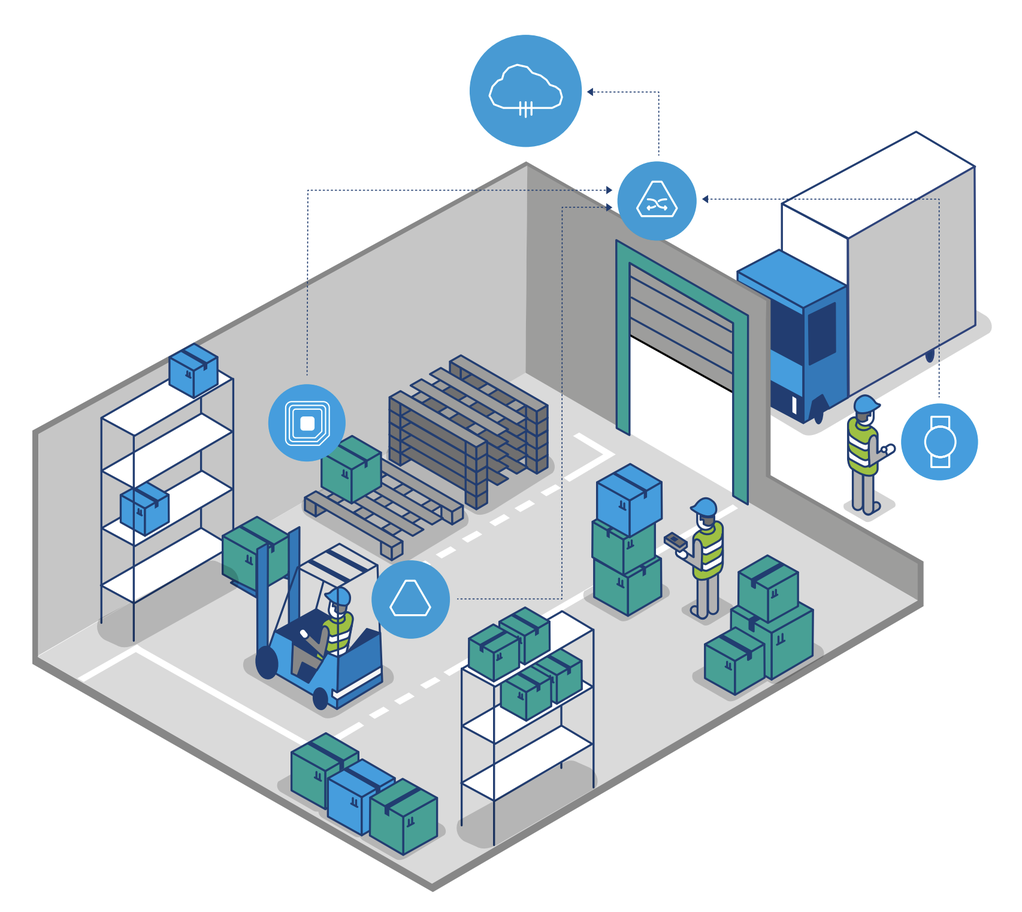
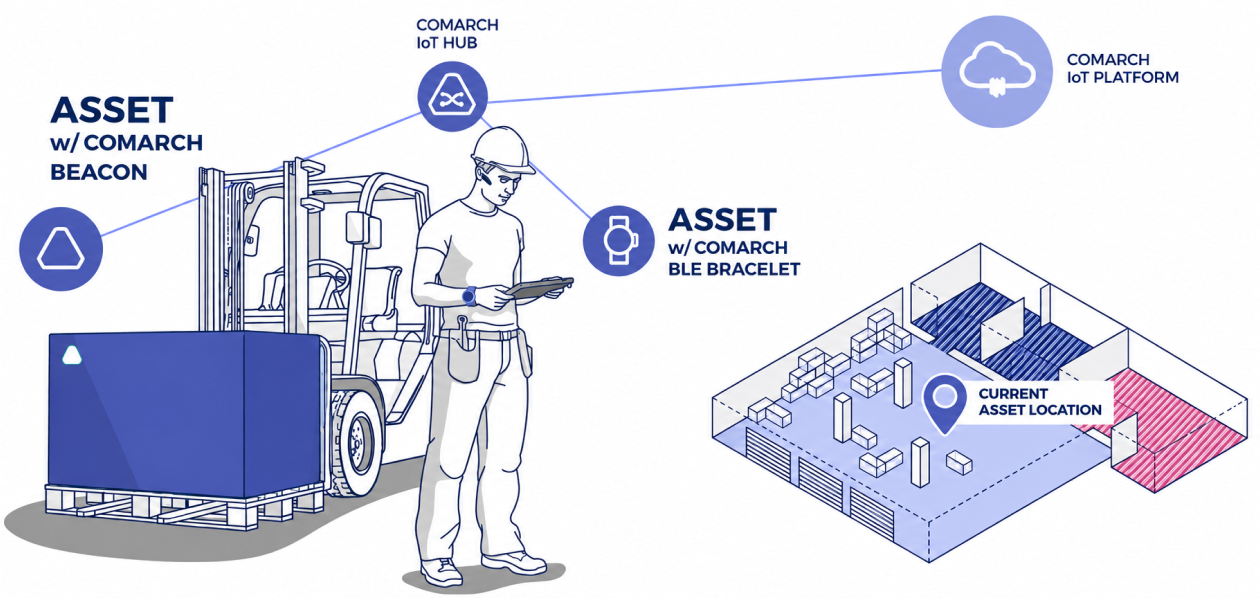
Comarch Asset Tracking is an IoT platform designed to help organisations locate, identify and monitor physical assets in indoor environments.
The solution connected tracking devices, including BLE beacons, bracelets
and RFID tags, with IoT Hubs, a cloud platform and web and mobile applications.
Making asset data actionable
Large manufacturing halls and warehouses contain numerous tools, vehicles and other assets that need to be available when they are needed. When employees cannot quickly locate a forklift, tool or piece of equipment, daily operations
are interrupted and time is lost.
The challenge was not only to show location data on a map. The product needed
to translate data from physical tracking devices into useful information for people working in operational environments.
The solution also had to support organisations with different processes, reporting needs, physical layouts and display constraints. Each client had its own way
of working, but the product needed to remain scalable instead of becoming
a separate custom solution for every deployment.
End-to-end product design
I worked on the project from the beginning and was responsible for the end-to-end UX/UI design process. My work included discovery, competitive research, user interviews, requirements definition, user flows, wireframes, map experiences, UI design, design specifications, usability testing and implementation support.
I collaborated closely with consultants, product stakeholders and engineering teams.
I also participated in testing the product together with the physical tracking devices
in Comarch’s production facility.
Learning from the production floor
As the UX/UI Designer, I contributed to discovery by reviewing competing asset-tracking products and indoor-location technologies, helping identify relevant approaches and product needs.
Together with the consulting team, I interviewed operational employees
and company owners in manufacturing and warehouse environments.
We explored how teams located equipment, which situations caused disruption, what information they needed in their daily work, and what reporting the business required.
One platform, different operational realities
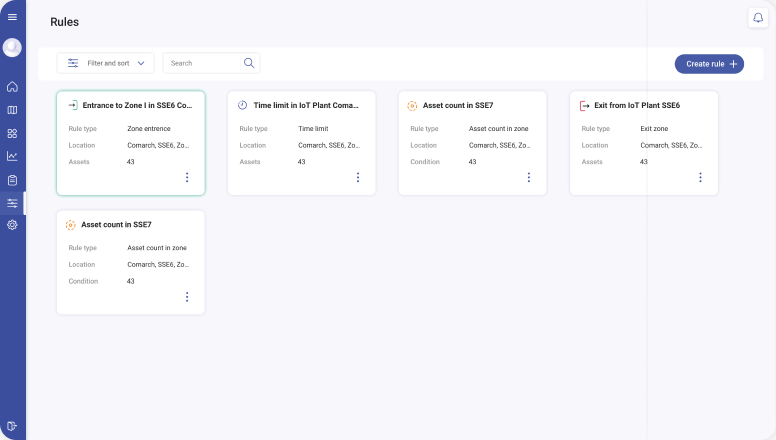
A key design challenge was finding a universal model for clients with different processes. The platform needed to allow configuration while maintaining a consistent product structure and interaction model.
The research showed that operational users needed fast and practical access to information. They were accustomed to simple, familiar tools and did not need to see every technical detail behind the tracking technology. At the same time, company owners and managers needed a more complete view of assets and processes. This meant the product had to support different needs without creating a complicated experience for everyday users.
fast access
find the right asset quickly
role-based views
show information relevant to each user
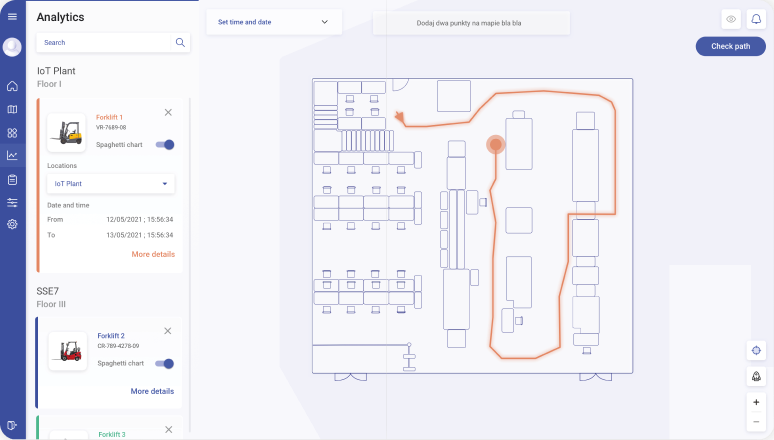
map-first workflows
make location and movement easy to understand
scalable configuration
support different sites and processes
Designing for operational environments
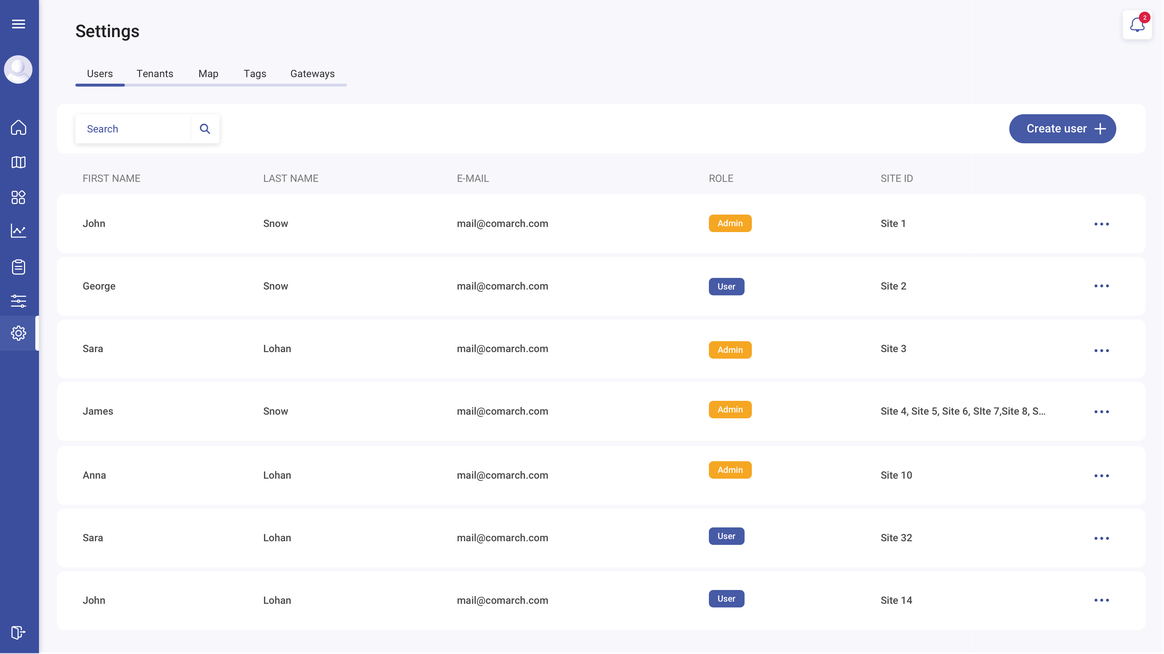
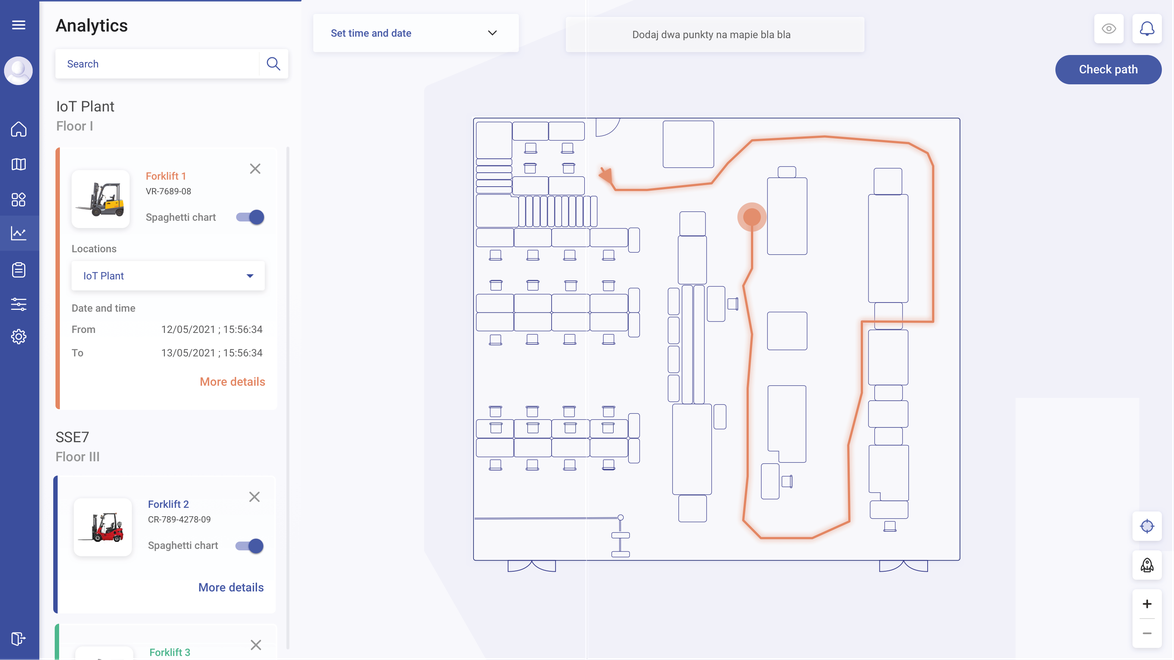
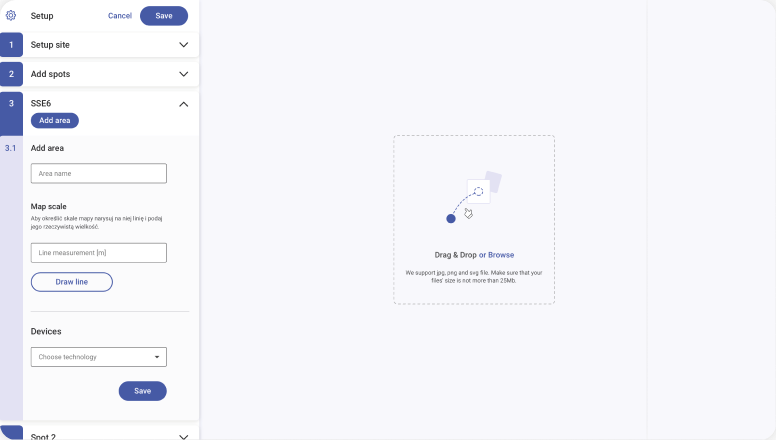
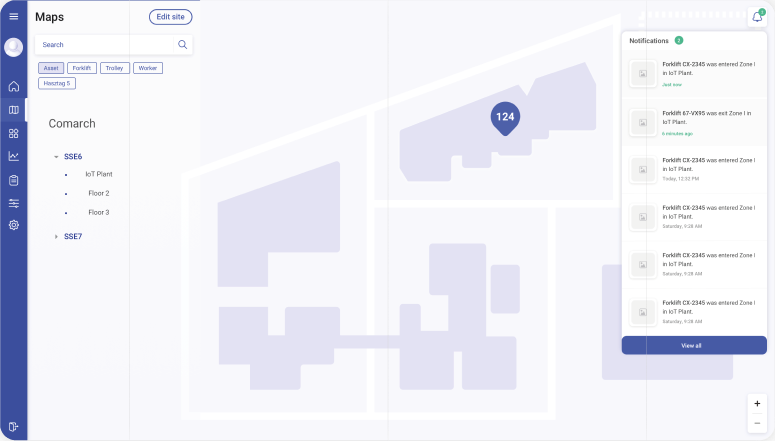
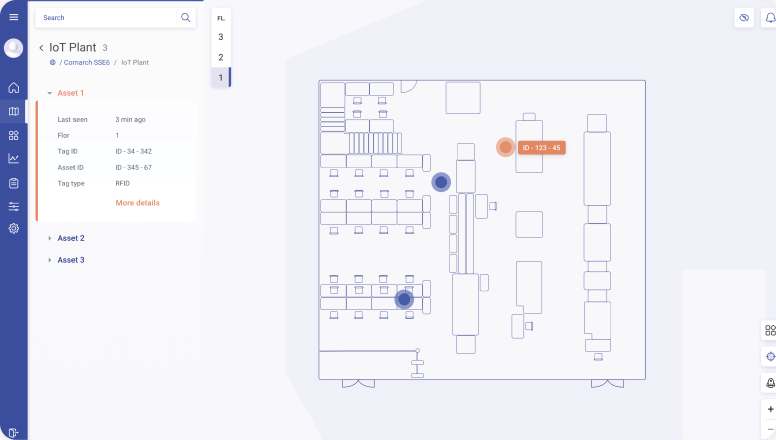
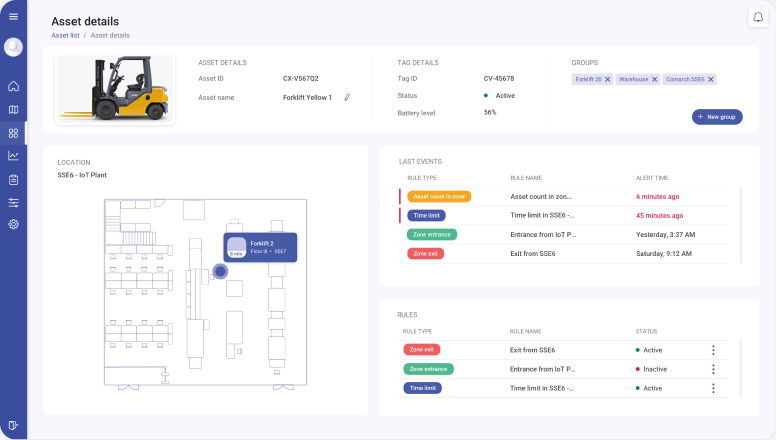
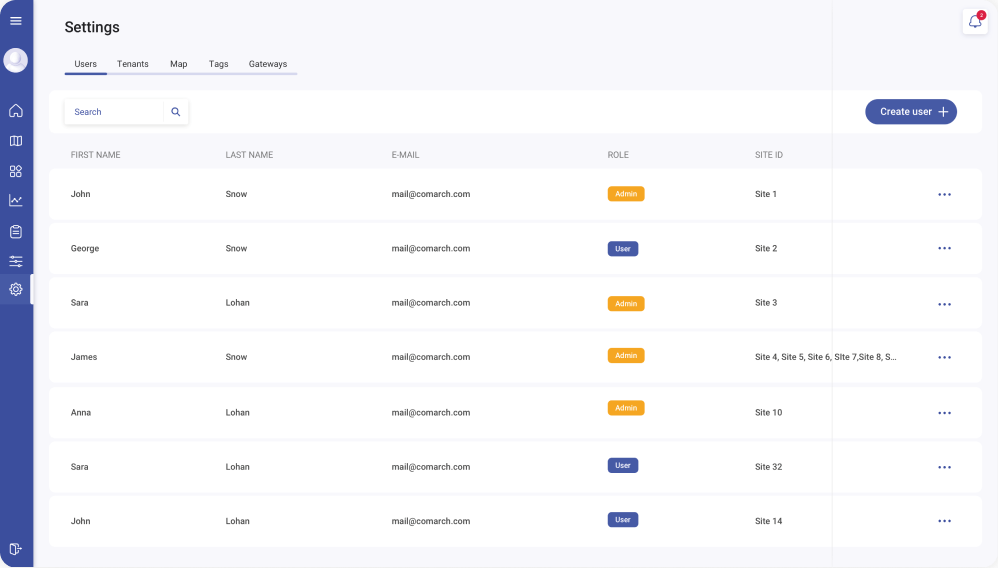
I designed web and mobile experiences for working with tracked assets, location data and operational information. Map-based workflows became a central part of the product. They allowed users to locate and monitor assets in a clear visual context instead of searching through complex lists or relying on manual processes.
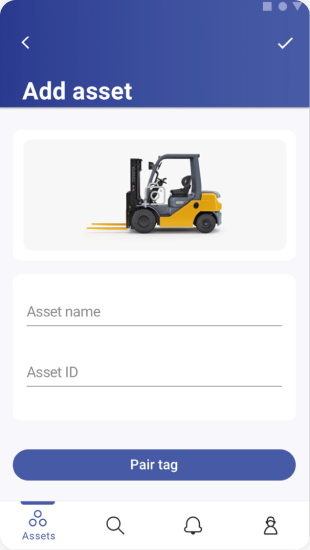
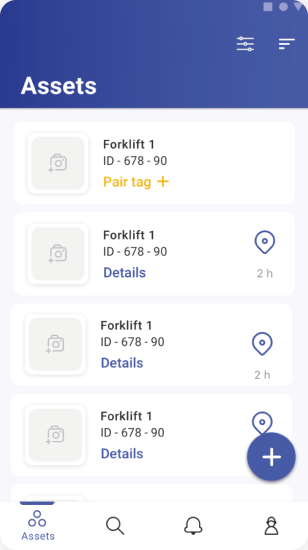
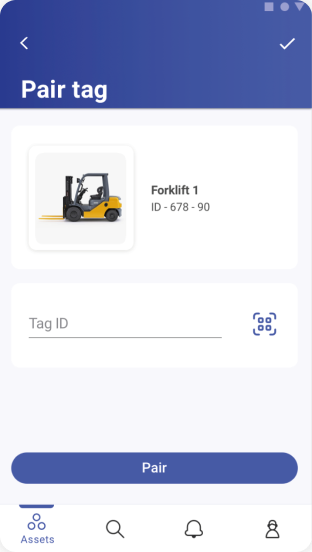
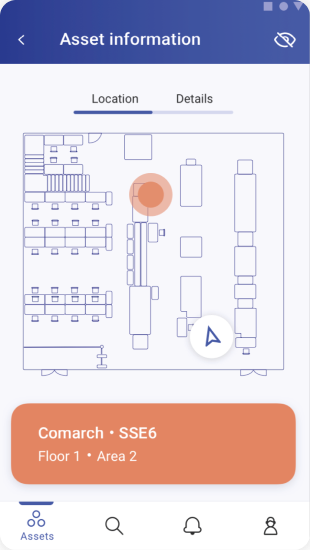
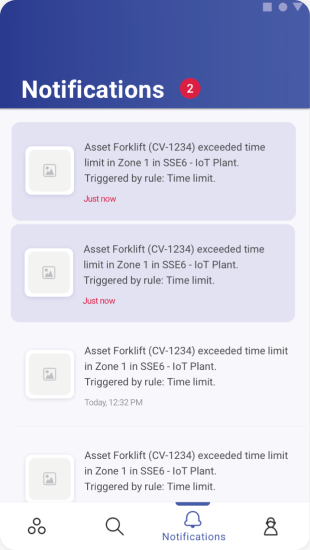
The interface was designed for people working in industrial and warehouse environments. I focused on clear hierarchy, simple interaction patterns and layouts adapted to the dimensions of target displays.
The design also considered the realities of the physical environment, including the limitations of production halls and the relationship between tracking devices, location data and the digital interface.
Turning phisical devices into trackable assets
Real-time tracking only works when a physical tracking device is correctly connected to its digital representation in the platform.
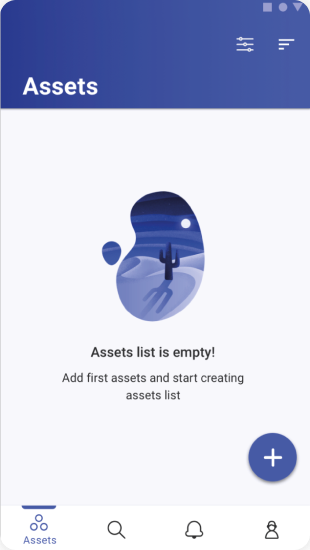
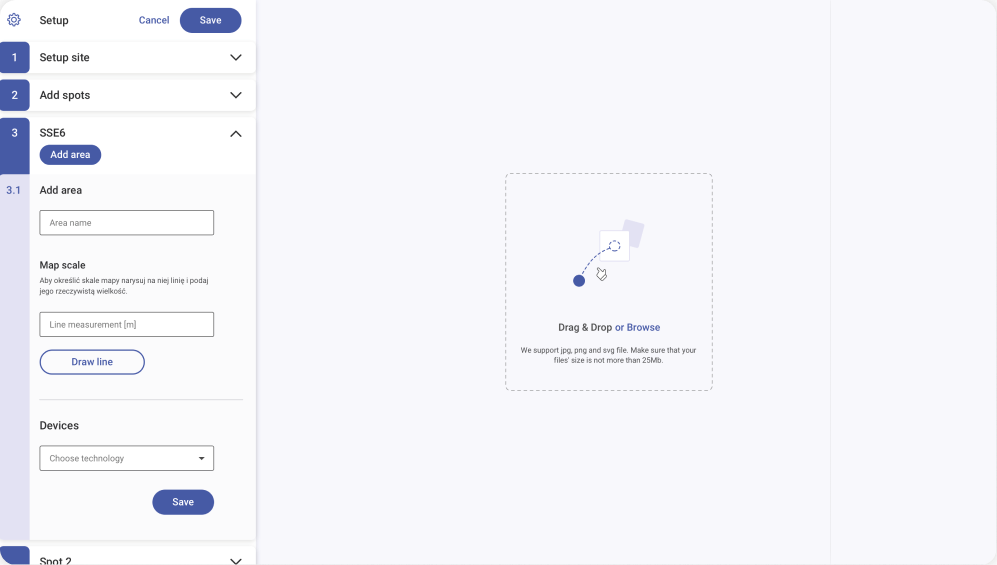
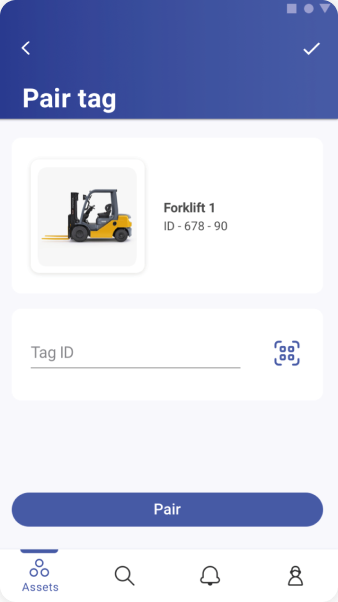
I designed asset-device pairing workflows for both web and mobile applications. These flows allowed users to associate a tracking device with a specific asset, such as a forklift, so that incoming location data could be identified and displayed in the correct context. The pairing experience was part of the wider asset onboarding process.
Users needed to manage the relationship between a physical device and an asset record before the asset could be monitored on the map, included in rules and alerts, or used in reporting. This feature connected the physical setup on the production floor with the digital product and made real-time asset tracking possible for operational teams.
Testing the product where it matters
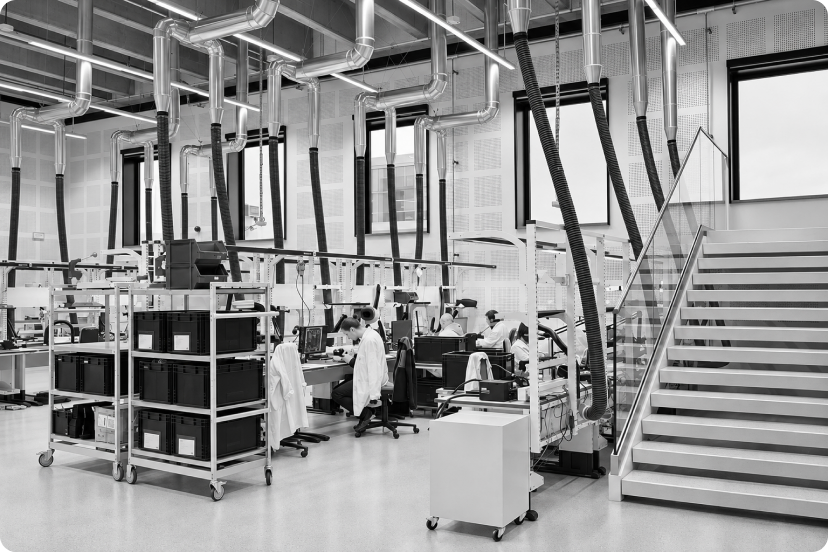
After the tracking devices were built and installed, we tested the complete solution in Comarch’s own production facility.
Testing the product in a real environment allowed us to evaluate the relationship between the devices, location data and the interface. It also helped us identify practical issues that could not be fully understood through prototypes alone. The testing process informed further improvements to workflows, interface details and the way information was presented to users.
From prototype to a live IoT platform
The first version of Comarch Asset Tracking was released in Q3 2022.
The project resulted in a web and mobile product that connected physical tracking technology with the daily workflows of operational teams. It provided a foundation for tracking assets in industrial and retail environments while supporting different client processes through a scalable product model.
Designing beyond the screen
This project taught me how to design for the connection between physical hardware and digital products. It strengthened my ability to translate complex technology, operational requirements and real-world constraints into interfaces that are clear and practical for end users.